Graham A. Scholes is an artist, author, and educator whose career spans watercolour painting, woodblock printmaking, drawing, photography and sculpture.
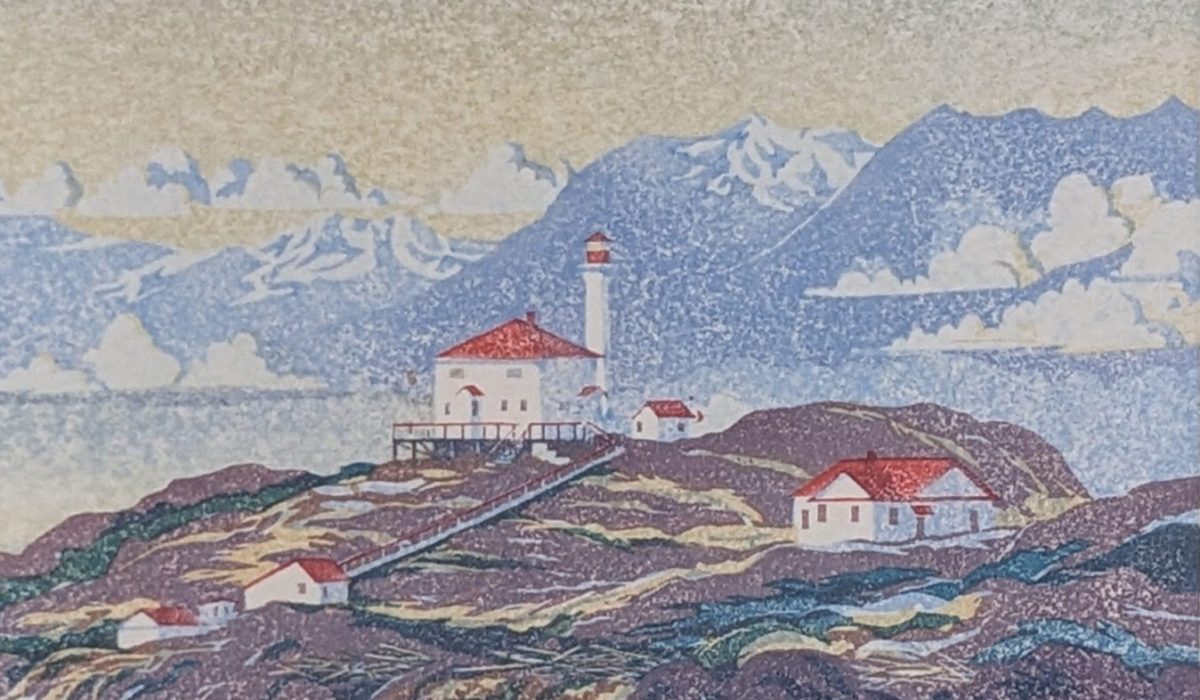
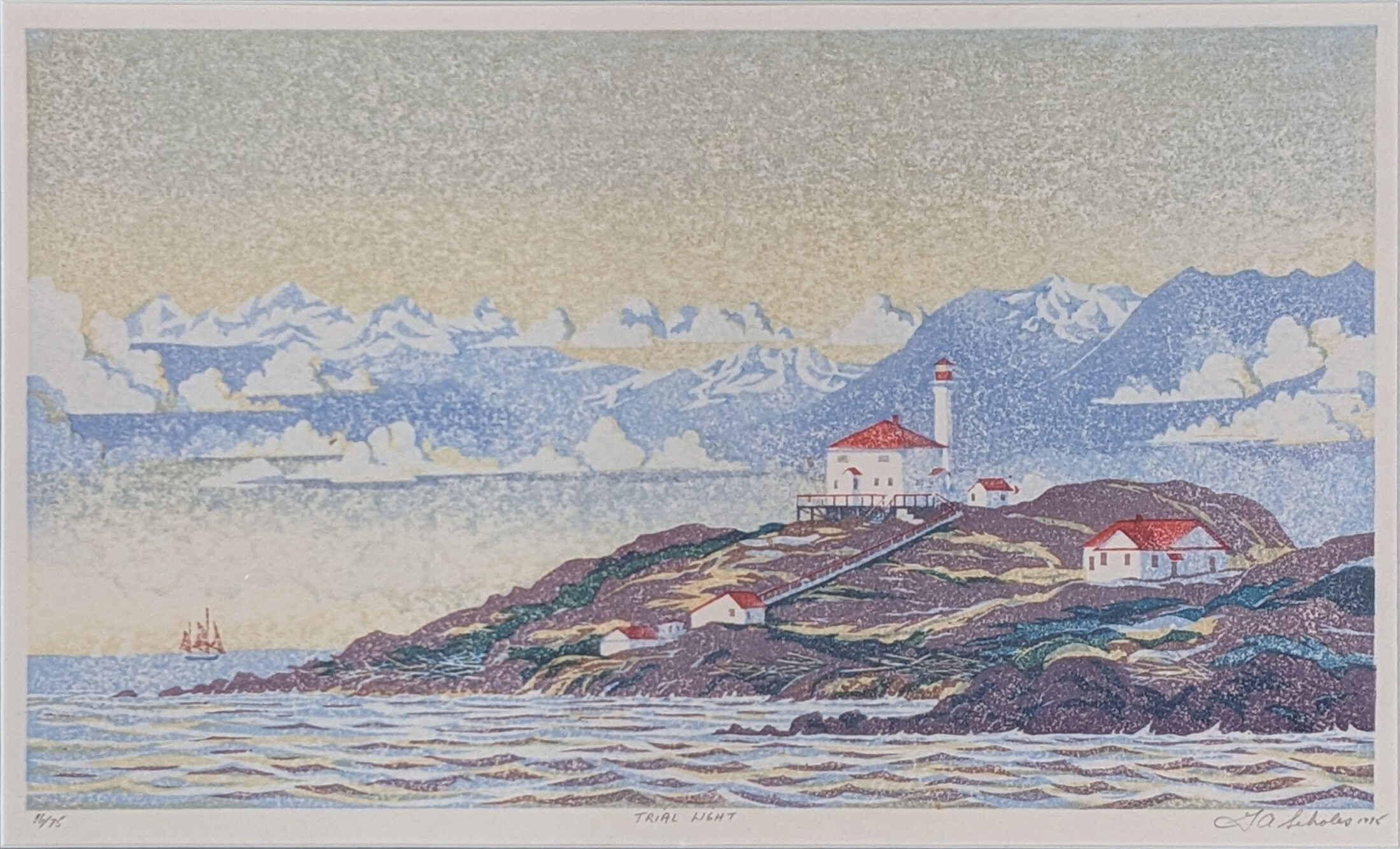
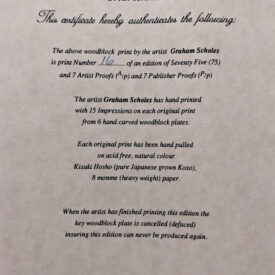
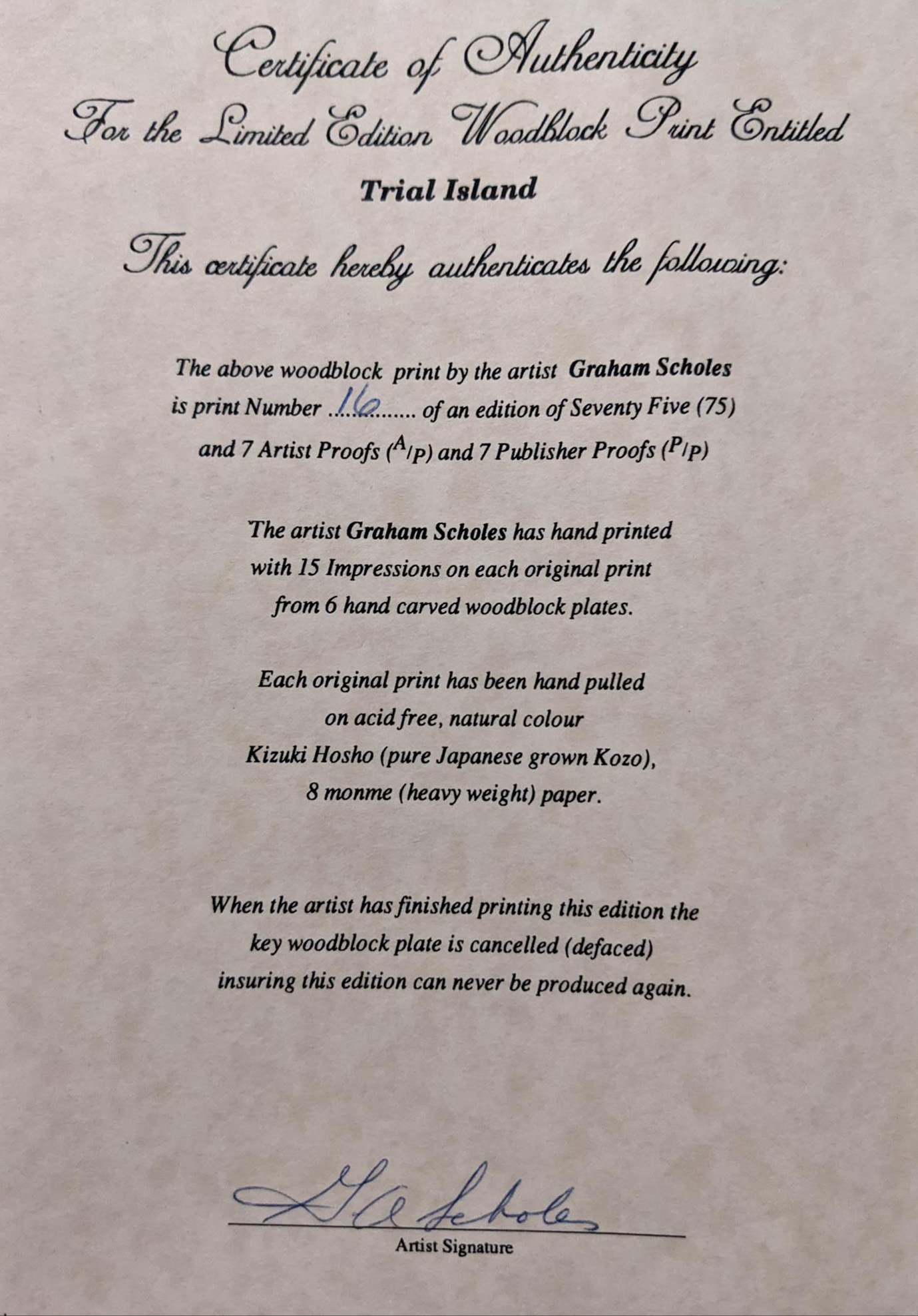
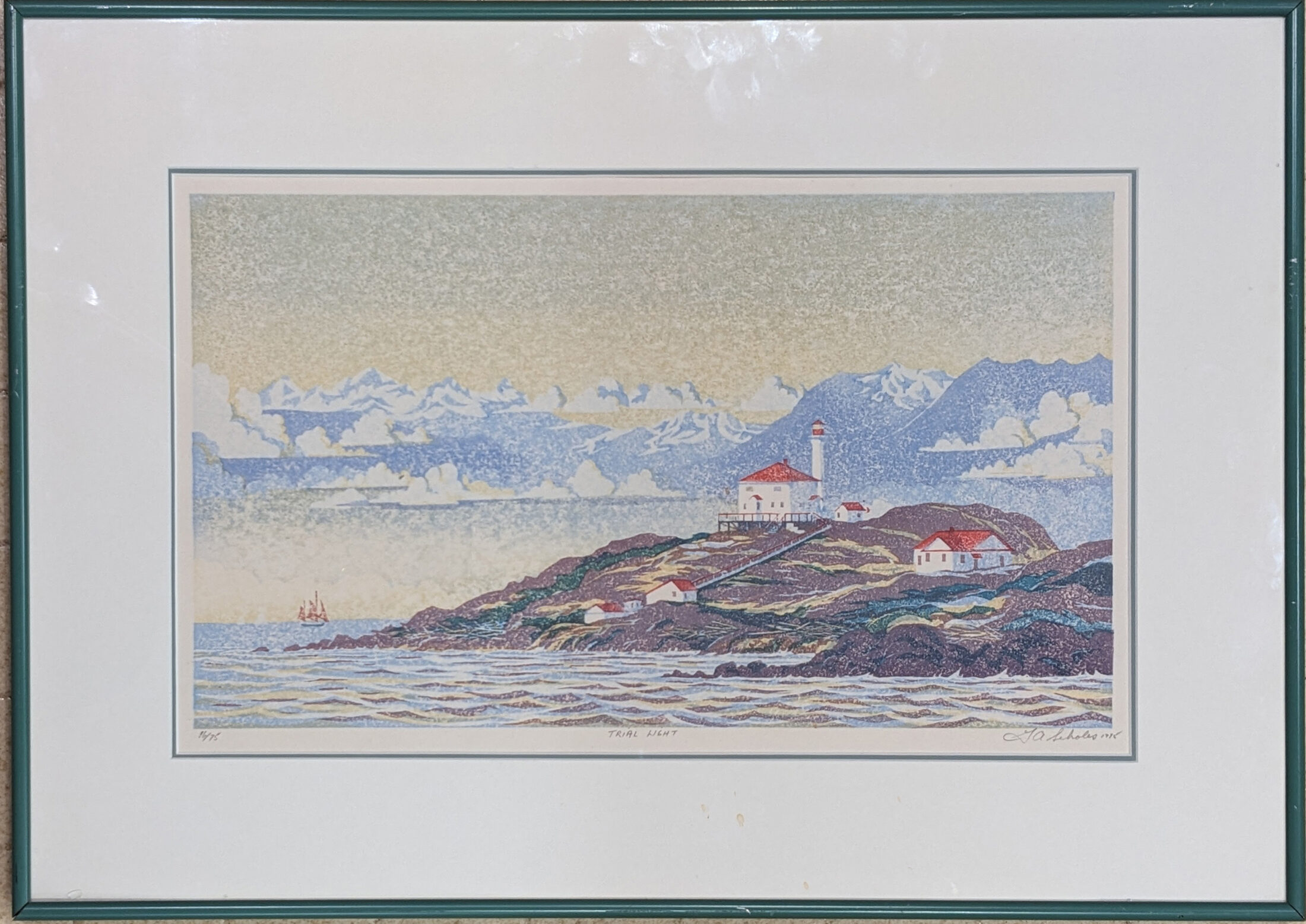
Best known for his mastery of mokuhanga—the traditional Japanese method of woodblock printmaking—Scholes has devoted more than three decades to exploring the expressive possibilities of this demanding hand-crafted medium. Working on handmade Japanese Hosho paper and employing traditional carving and burnishing techniques learned from master printmaker Noboru Sawai, he has created an extensive body of woodblock prints, including his celebrated series depicting the lighthouses of BC.
His work is rooted in direct observation and personal experience; with the cooperation of the Canadian Coast Guard, he visited every lighthouse on the BC coast to gather material for these images. Throughout his career, Scholes has emphasized the importance of drawing as the foundation of artistic practice and has continually expanded his technical repertoire through processes such as waterless lithography, solar plate, dry point, reduction printing, and mixed printmaking techniques.
Born in Toronto in 1933, Scholes studied at the Toronto Art Gallery's Saturday art classes before earning a Graphic Arts Degree from Western Technical School (1948–1952). After working in graphic design, advertising, publishing, and the packaging industry, he transitioned to a full-time career in fine art and became one of Canada's most active art educators, conducting watercolour workshops and seminars across the country for sixteen years beginning in 1977.
He taught at institutions including Camosun College, North Island College, Georgian College, and Northern Lights College, while also organizing community life-drawing programs for decades. Scholes is the author of Watercolor and How (1989) and Let There Be Light, a book chronicling his mokuhanga work and BC lighthouse series.
His prints have been exhibited widely in solo and group exhibitions across Canada and internationally, and his work is held in numerous public, corporate, and museum collections. His instructional video on Japanese woodblock printmaking is held by major institutions including the Museum of Modern Art in New York, the National Gallery of Canada, and the Vancouver Art Gallery.